In this interview, the company highlights its expanding role in Montevideo’s logistics and foreign trade sectors
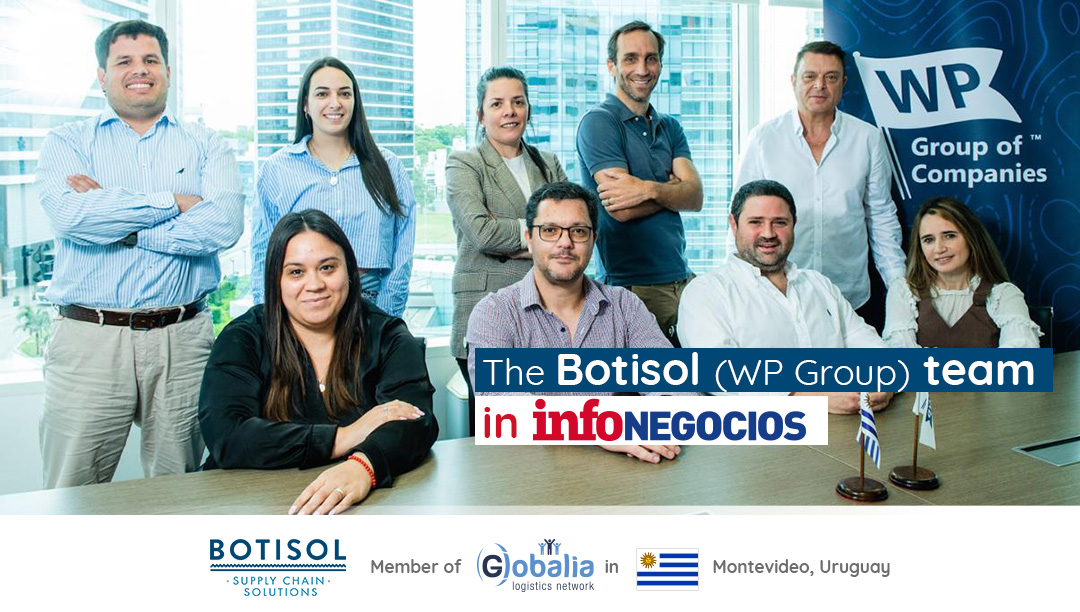
Botisol Supply Chain Solutions, Globalia member in Montevideo, Uruguay, and part of WP Group, has been featured in Infonegocios.biz following an in-depth interview that sheds light on the company’s evolution, work culture, and growing influence in Montevideo’s logistics landscape. In under a decade, they have transformed from a freight agency supporting importers and exporters into a diversified logistics group offering land and maritime transport, warehousing solutions, and offshore maritime services.
In the interview with Info Negocios, the team explains that their operations move at a pace marked by constant problem-solving, quick decision-making and a steady flow of urgent requirements across multiple business units. To navigate this environment, Botisol relies on a horizontal structure empowered by highly experienced team leaders who can act swiftly and independently.
Team of Botisol Supply Chain Solutions
Speaking about the company’s mission and the mindset that drives their work, Ignacio Weiss, Chief Operating Officer of WP Group, notes: “Our goal is to become the indispensable strategic partner for every client. Therefore, we make their challenges our own and aim to deliver solutions that go far beyond logistics. At the end of the day, our team’s purpose is to turn complex problems into effective results.”
Additionally, the interview also highlights key moments that reflect the team’s resilience, including a major offshore operation carried out during the pandemic, when Botisol coordinated private aircraft, emergency authorizations, and strict entry protocols to repair a vessel with a severe rudder malfunction.
Finally, the feature closes with the company’s approach to recognizing internal achievements. Even with the constant operational rush, they make space for shared moments and have implemented a career and recognition plan that includes performance bonuses and loyalty rewards such as fully paid trips for long-serving team members. Botisol’s presence in Infonegocios.biz reinforces its position as one of their territory’s most dynamic logistics players and a worthy representative of Globalia Logistics Network in the region.
Congratulations and all the best for their upcoming projects!
In an opinion piece for Diario El Canal, Maria Serrano, Head Office Manager of Freight Forwarders Network Solutions, outlines what makes a logistics network truly reliable and how Globalia Logistics Network stands out in a competitive market
As she explains, the role of freight forwarders’ networks has evolved dramatically over the past decade. “The question is no longer whether to join a network, but rather which one to choose,” she said, highlighting how networks have become essential for forwarders seeking to stay competitive against multinational logistics companies.
How to choose the best logistics network?
The Growing Importance of Reliable Networks
With the number of logistics alliances rising rapidly, Serrano cautioned that not all of them offer the same value or sustainability. Some networks, she noted, are created without a solid structure or long-term vision, while others allow uncontrolled expansion that leads to internal competition and instability. “This often results in forwarders jumping from one network to another without establishing lasting relationships or achieving tangible business growth,” she pointed out. “That’s why networks today must distinguish themselves through real stability, trust, and quality if they want to earn members’ long-term commitment.”
What Freight Forwarders Should Look For
Serrano identified several key factors that freight forwarders should evaluate before joining a network:
Trust and experience: A network with years of operation and long-term members demonstrates true resilience and credibility.
Quality of members: Forwarders should look for networks that thoroughly vet their members to ensure professionalism and reliability.
Limited competition: Exclusive or semi-exclusive networks allow members to enjoy visibility and real business opportunities.
Balanced global coverage: A well-distributed global presence ensures seamless cooperation across continents.
In-person networking: Annual meetings and conventions are vital for building genuine, lasting partnerships.
Digital tools: Networks that embrace technology offering solutions like instant online quoting or shipment management apps give members a competitive edge.
The Value of Belonging to the Right Network
According to Serrano, being part of a network doesn’t automatically guarantee more business, it requires time, effort, and proactive engagement. However, being part of the right network can make a remarkable difference. “At FFNS, our goal has always been to provide stability, transparency, and opportunities for collaboration,” she said. “Each of our networks, Conqueror Freight Network, The Cooperative Logistics Network, and Globalia Logistics Network has been designed to meet different business models while maintaining the same high standards of quality, financial security, and trust.”
Globalia Logistics Network: Building Trust and Collaboration
She highlighted Globalia Logistics Network as a prime example of how a well-structured network helps independent freight forwarders grow. With members across more than 140 countries, Globalia maintains rigorous entry requirements and financial checks to ensure every agent in the network meets the highest standards. “Globalia offers an environment where independent freight forwarders can connect and collaborate with reliable partners worldwide,” she explained. “We promote professional relationships among agents whose financial stability and operational consistency have been verified, giving members the confidence to expand globally while minimizing risk.”
Beyond its global reach, what truly sets Globalia apart is the personal connection it fosters through its Annual Meetings. These gatherings give members a rare opportunity to meet face-to-face, build genuine trust, and turn partnerships into real business opportunities, something that’s hard to replicate in larger, less personal industry events.
Additionally, Globalia continues to invest in technology and member support. Its FreightViewer platform allows members to generate instant online quotes, improving transparency and efficiency in day-to-day operations.
A Commitment to Long-Term Growth
She concluded that while joining a network requires commitment and active participation, the rewards are worth it when members choose wisely. “Being part of a network doesn’t guarantee success, but being part of the right one can make all the difference,” she said. With over a decade of experience, Freight Forwarders Network Solutions continues to provide a secure, technology-driven, and collaborative environment for independent freight forwarders. Globalia Logistics Network, Conqueror Freight Network, and The Cooperative Logistics Network stand as pillars of that vision, empowering logistics companies to thrive in a connected and ever-evolving global marketplace.
“Importers (and forwarders acting on their behalf) need to double-check all their data: valuation, documentation, HS codes, supplier records, declared addresses, and regimes. Even minor clerical errors might not trigger the maximum fine, but the trend is clear: compliance will not be treated lightly going forward.”
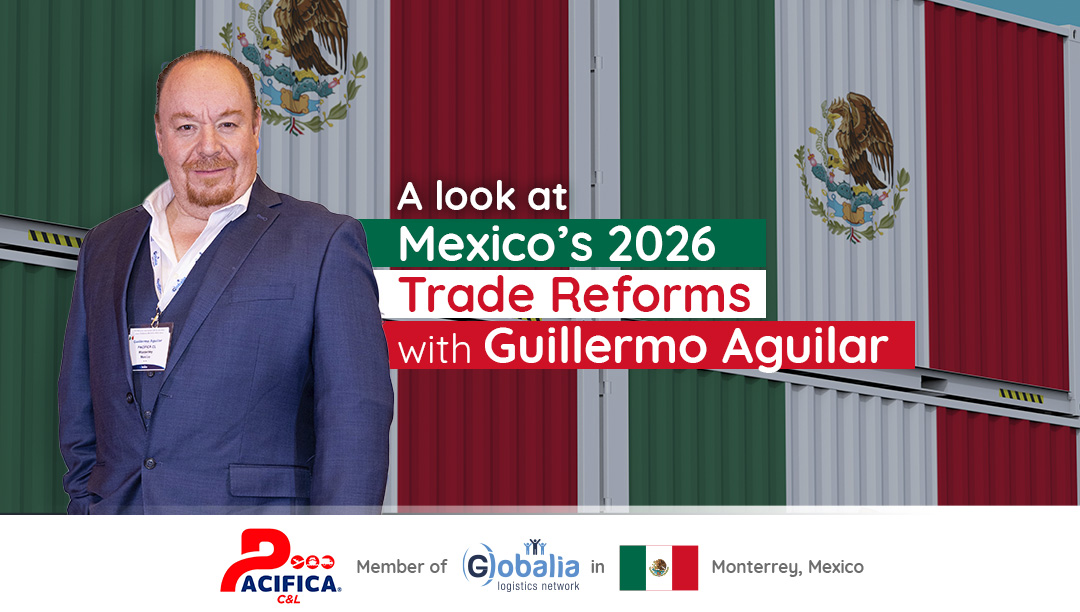
This week, we had the pleasure of speaking with Mr. Guillermo Aguilar, Director of Pacifica Customs & Logistics, Globalia member in Monterrey, Mexico. In our discussion, Mr. Aguilar shed light on the upcoming customs and tariff reforms that will reshape trade with Mexico by 2026, and explained how Pacifica is helping clients prepare through proactive compliance and inspection strategies.
Mexico’s 2026 Trade Reforms
Q: What are the key customs and trade changes coming into effect?
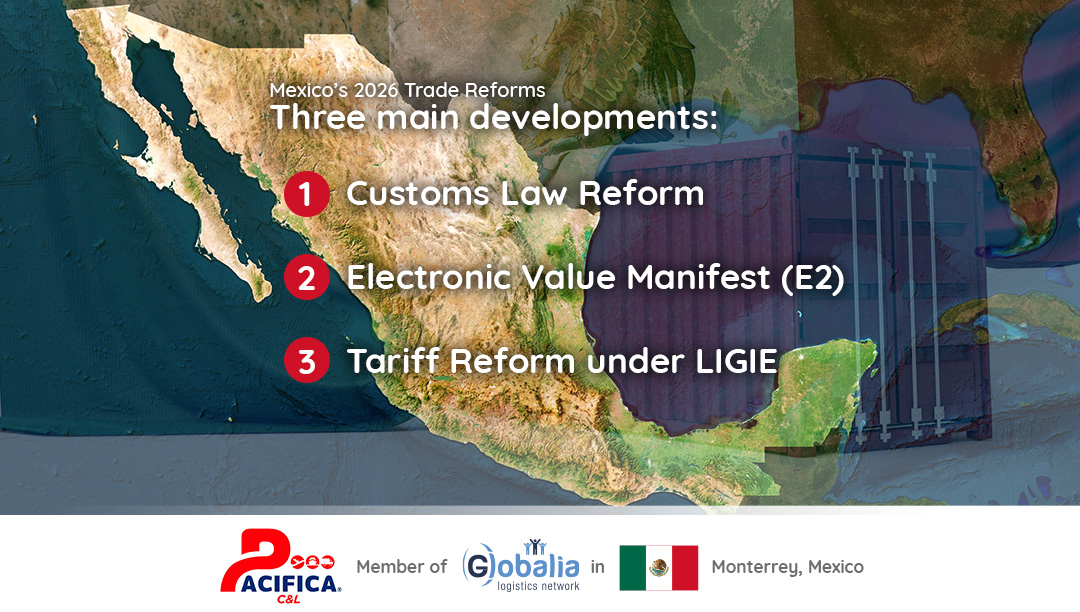
A. Three main developments will redefine trade with Mexico over the next year:
Customs Law Reform – This will tighten controls, expand liability for customs brokers and importers, and integrate advanced digital systems for inspection and traceability.
Electronic Value Manifest (E2) – Importers will be required to electronically submit valuation details before cargo clearance, ensuring complete transparency in declared values.
Tariff Reform under LIGIE – The government has proposed tariff increases affecting 1,463 product classifications, significantly expanding on last year’s adjustments. Duties could reach 35%, and in certain cases, 50%, for goods from countries without a free trade agreement with Mexico.
Together, these measures mark a clear shift toward stricter, more technology-driven customs oversight.
Q: Can you tell us more about the tariff reform and the sectors it will impact?
A: Yes. The LIGIE reform is extensive. The most affected sectors include automotive and auto parts, plastics and chemicals, footwear and leather goods, textiles and apparel, steel and aluminium, furniture, wood, paper, and cardboard, toys, sporting goods, and household items.
These changes align with Mexico’s National Development Plan 2025–2030 and Plan México, aimed at promoting domestic industry, supporting small and medium-sized enterprises, and reducing import dependency. However, for importers and forwarders, the short-term effect will be higher costs and more complex tariff management, especially for shipments from non-FTA countries.
“At Pacifica, we’re helping clients run E2 readiness audits, checking their valuation records, supplier documentation, and internal workflows. By simulating the new digital process ahead of time, we identify weak points early.”
Mexico’s 2026 Trade Reforms
Q: What’s driving these reforms? Why is Mexico doing this now?
A: The government wants to strengthen revenue collection, increase trade transparency, and push industrial growth. Mexico’s role in nearshoring and regional manufacturing has grown fast, but the customs system needs modernization. These reforms are meant to bring Mexico in line with global compliance standards, improving oversight while encouraging local production. The challenge is that it raises the administrative burden for international traders in the short term.
Q: What exactly is the new Electronic Value Manifest (E2), and how should companies prepare?
A: The E2 Manifest replaces the old manual system with a fully digital platform. Importers will need to provide complete valuation data, including freight, insurance, commissions, discounts, and royalties, before goods arrive. If data is missing or inconsistent with invoices, customs can block clearance automatically. At Pacifica, we’re helping clients run E2 readiness audits, checking their valuation records, supplier documentation, and internal workflows. By simulating the new digital process ahead of time, we identify weak points early.
Q: Are there any specific risks or penalties that forwarers should be aware of?
A: Yes, and you’ll want to pay attention. Under the proposed 2025 reforms to the Ley Aduanera (Customs Law), the catalogue of customs violations is being expanded and the corresponding fines significantly raised. One legal commentary refers to penalties being more than doubled for serious infractions like undervaluation or misuse of customs regimes. Some reports even mention fines potentially reaching up to 300% of the value of the goods or omitted duties in extreme cases.
What this really means is that mistakes in customs declarations, especially major ones like incorrect value, wrong tariff classification, or misuse of inventory/temporary import regimes, can carry very heavy financial exposure. Importers (and forwarders acting on their behalf) need to double-check all their data: valuation, documentation, HS codes, supplier records, declared addresses, and regimes. Even minor clerical errors might not trigger the maximum fine, but the trend is clear: compliance will not be treated lightly going forward.
Q: Which businesses will be most affected by these reforms?
A: The biggest impact will be on importers of industrial goods, automotive parts, textiles, and electronics, especially those sourcing from Asia. Tariff increases and stricter documentation will raise costs and lengthen clearance times unless companies adapt quickly. On the other hand, domestic manufacturers and FTA-based trade partners could gain a competitive edge. Mexico is clearly steering policy toward local value creation.
Q: How is Pacifica helping its clients with pre-shipment inspection services in Asia?
A: We review compliance with Mexican regulations and streamline customs clearance by inspecting goods at origin, before they leave for their destination. Our origin inspections strategies help to minimize risks and processing times at Mexican customs offices that receive imports from Asia. This step helps ensure that valuation, labeling, and documentation are correct from the start, preventing costly delays or holds upon arrival in Mexico.
Our pre-shipment team works closely with suppliers and freight forwarders in Asia, verifying that all documentation aligns with Mexican import requirements, including those under the upcoming reforms. This proactive approach not only saves time but also gives our clients peace of mind knowing that their cargo is fully compliant before it even sets sail.
Q: What steps should global freight forwarders take to stay compliant?
A: Start by auditing your documentation workflows and making sure that invoices, manifests, and customs declarations are perfectly aligned. Next, get ready for digitalization: the new E2 platform and upcoming biometric systems will remove the option for manual corrections, so accuracy from the start is essential. It’s also smart to revisit your supplier network, especially if you import from non-FTA countries, to reduce tariff exposure. And finally, stay informed. Regulations are evolving quickly, and having a local expert on your side is the best way to stay ahead of these changes.
Q: Any final advice for importers and logistics partners trading with Mexico?
A: Don’t wait until 2026. These reforms are already in motion, and customs authorities will expect full compliance from day one. Start aligning your systems, train your teams, and review your suppliers now. Mexico is modernizing fast and those who adapt early will be the ones who move goods faster, more efficiently, and without costly delays.